








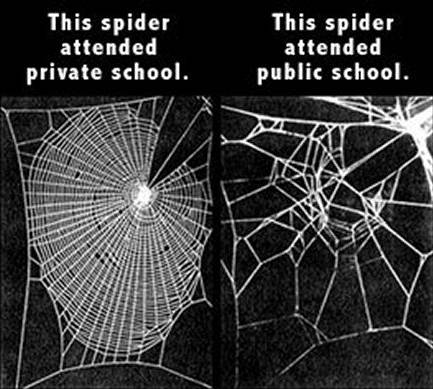
School and education system are some of the most important social institutions in our society. It is generally accepted the idea that Romanian education system, despite the attempts of institutional reform according to European standards, has various functioning problems. The weak capacity of education to stimulate creativity and human capital accumulation is the natural consequence of lack of incentives among state-run-schools. What could be wrong if the education system will be managed according to market rules? This paper looks to examine the main arguments favoring pro-market reform in education, and finally to identify the general principles called to guide education reform.
The Economic Analysis of Education
Presently there is an increasing interest towards the economic analysis of education, once it has been acknowledged as a determinant factor for the progress of society. Analyzing the concept of education we can find, on the one hand, a formal level: the school and the educational system and, on the other hand, an informal level represented by the education received inside one's family, from the media, the Church or other social institutions.
Education is a learning process occurring during the entire life, not only in schools but also in all other aspects of social life. When an individual is playing, listening to his friends or parents, reading the paper or working, he acquires knowledge. From this perspective, the formal education represents only a small part of the educational process, and it is suitable only for academic topics, especially complex and specialized ones. The essential aspects such reading, writing, calculating and so on, can be easily taught at home and outside school[1]. In our paper we will focus mainly on the formal education. The approach is derived mainly from building a frame for the economic analysis of education.
The market is an exchange system of the private property rights; the economic dimension of the exchange terms is the market prices that are making the economic calculation possible. Using the mechanism of profit and loss, the decentralized allocation of resources contributes to their distribution according to the most valuable uses. As there are a very large number of individuals on the market, there is also an efficient allocation of the scarce resources in the society. All the above can help us to appreciate correctly the realities existent on the educational market, in order to finally be able to identify some possible solutions for an efficient functioning and -apparently paradoxes- ethical principles of this domain. Thus, we try to show that education, such as any other public service, cannot be provided more efficiently apart from the mechanisms of the market.
Similar to the ordinary market, we can talk about defining elements for the education market: demand, supply, market price, competition.[2] Thus, the demand of education expresses the need for information, knowledge and abilities that are coming from the consumers of educational services: pupils, students, parents, corporations. A defining feature for this market is the fact that those who demand educational services (students and pupils) are not passive customers - as for the majority of the goods - but they are also producers, by actively participating to the educational activities.
The education supply comes from different public or private educational institutions, and their mission is to satisfy the needs of their clients. This situation could make us believe that, as suppliers of educational services, there is a strong competition between schools to satisfy the educational needs of parents and children. Then, we can ask ourselves what is going wrong with the education supply or more broadly with education system? Presently all private schools who want to enter the market of education are compelled by the law to ask for an authorization and accreditation from the Ministry of education and research. In other words, every private school cannot organize his business as he thinks necessary to suit his clients, but as the public institution feels it has to be organized. That's why we believe that is wanted a private alternative to the actual public education system, but only according to its principles and organization. Still, despite all institutional constraints and barriers, it appears that the private education system is more suitable for the public needs. A proof to support this is the different development of economic, juridical or polytechnic education in the two systems, which shows on one hand a greater opening of the private sphere to the stimulants of the education and labor market, and on the other hand the reluctance and inflexibility shown by the public sector when it comes to change and adapt the educational services.
We can anticipate therefore the necessity of a massive liberalization of educational services, of eliminating of most of institutional constrains to entering the education market as a measure to show more interest for the demand coming from the consumers of education. Practically, we suggest a new way of thinking, a new paradigm change in education meant to overpass the present approach based on uniformity and to replace it with the one oriented towards diversity. In a paper regarding state education, Rothbard appreciated that it is in the nature of every governmental bureaucracy to be guided by a set of rules and therefore to impose them in a uniform, rather aggressive manner. Except for the last attribute, there are many opinions even inside the governmental structures coming to support this reality. But why is it not good to have a unitary treatment or in other words, what would make the difference in promoting diversity in education matter?
Certainly, ensuring too much diversity wouldn't be good for the government who would feel compelled to take different decisions depending on the levels of education, their profile and so on. Still, even if it stays faithful to the uniformization policy, the bureaucrats have to face many crucial and controversial decisions when he must decide the pattern of the formal education system under his jurisdiction. He must decide how this system should be, traditional, or progresist. Favoring competition or being even? Segregated or integrated? Including sexual education or not? Focusing on liberal arts or based on vocation?[3]
There is a fundamental distinction between the expectations guiding the behavior on the market of the private and public schools. The market oriented schools have strong stimulants to allocate their resources towards developing a set of educational services compatible to the expectations of the families, and the specialized abilities required by the economic activity. Accomplishing this kind of compatibility between education quality and the level of school taxes is the necessary condition to continue this activity. In other words, not respecting this rule can lead to financial difficulties and, in the end, to bankruptcy. But can we say the same thing about the public schools? No, unfortunately. The fact that public schools do not depend entirely on the consumers' payments to get their financial resources offers weak incentives for public education managers to increase the quality of their services, to reform organizational structures or to adapt school programs depending on the new social-economic factors. Thanks to redistribution process of budgetary resources, the state keeps its schools away from the market rules (e.g. possibility of bankruptcy). Therefore these schools are not necessarily motivated to adapt to the dynamic demand of the customers, parents and children being captives of the public education system.
Analyzing the educational process from an economic perspective we can suggest that only by manifesting liberty of choice and competition between schools can the reorganization of the system be achieved. The development of the private sector as education supplier has, among the positive implications involving quality also an ethical reason. Parents who consider public education not suitable for their children, or just don't believe it provides a suitable education according to their own beliefs and values and whose children attend private schools, they have to face a double issue: they are compelled, on one hand, to pay taxes and support the education of all the children from the public schools and, on the other hand, to pay for their own children's education. Is this situation ethical? It is obvious that this money transfer is not voluntary and this shows utter ignorance of this fundamental principle.
„The Right" to Education
According to the article 32 align. 1 from the Romanian Constitution „the right to education is ensured by the compulsory primary education, the secondary, the professional one and also the superior ones, including other forms of instructions". Generally it is considered that the right to education (and, afterwards, the right to a job) is as important as the right to defends one's life or free of speech. As a consequence, it is considered that's our duty to sustain, respect and protect these rights. But if we analyze it thoroughly we would unveil some problems concerning the above interpretation.
Is there any distinction between the right to protect one's life or the right of free to talk, on one side, and the one to work and to be educated, on the other side? Although our analysis can be considered rather philosophical, it is strictly necessary in order to understand the fact that, while the first of them come from human nature itself, the other two are not fundamental rights to apply no matter the time and place. The right to work and education cannot be guaranteed and applied legally despite all legal reglementations, but the natural right of freedom of speech or to defend one's life is equally and universally applied. Moreover, the right to speak one's mind does not involve consequently affecting the freedom or the rights of other to express their own opinion, while the institutionalization of the right to public education, for example, means compelling a group or community to pay taxes for it, so there is a restriction of freedom to use their income as they wish.
On a different level of analysis, by introducing and accepting compulsory education, even if it is entitled free, the concept „right to education" has been misinterpreted and completely transformed into an obligation. If we agree that „from a philosophical view, a right must be something within human nature and reality, something that can be preserved and sustained anytime"[4], we find no mentioning of the terms obligation or compulsory. To have the right to an education mean being free to choose whether to act or not, meaning only people who want to use their right to go to school, and the others must not be forced by anyone else (not even by the state) to go through all the necessary steps of education.
The Need of Reforming Education System
Today more than anytime we witness a process of reorganization of the education system from the entire world. The reform in education is generated by the idea that any educational system may be improved. Taking into account the directions of the education reforms in different places of the world, it is surprising to conclude that although they have several particularities, all of them are built on some basic ingredients: promoting choice among the consumers and competition among schools.
It is acknowledged the fact that the deficiency of the public education system in shaping competent and creative young people is the consequence of poor disponibility to offer consumers opportunities and viable alternatives. What can be wrong in encouraging choice and competition in education sector? Is it not fair for parents to have the right to choose which school is considered best for their children? Then what can we say about the possibility that some schools (less popular) would have to shut down because educational services consumers choose other schools? Will the decentralization and competition between schools lead to improving the quality of curricula and academic courses? We will consider further four major arguments which altogether will support the idea of promoting choice.
The first argument is based on the presumption that parents have the fundamental right to decide on matters regarding their children. There are a few Conventions and International Declarations supporting this idea. For example, the Universal Declaration of the Human Rights adopted by the United Nations in 1948 states that: „...parents have the right to choose the kind of education their children will receive ". Also, the European Convention over the Human Rights states that „...in exerting the education and teaching process, the state will respect parent's right to ensure the education and teaching according to their religious and philosophical beliefs".
As a natural consequence, the second argument for justifying choice in education would be that parents are the most appropriate to choose a school to suit the needs of their children. Generally, parents have both a higher interest in the education of their children and also a deep knowledge of their possibilities and needs, more than anyone else. Social reformers and especially education's reformers start from the wrong premise that parents, especially the poor and less educated ones, are not interested in the education of their children nor have the competence to decide and choose for them.
The third argument in sustaining the free choice of schools comes from the idea that an increase of parents' implication would be beneficial for the way children see school, and their motivation. Few can contradict the fact that the high interest of parents in their children's education is mainly useful in the educational activity of children. Finally, there is the following issue: If parents can choose food, clothing and the place to stay for their children, why couldn't they choose also the school where they could study? In modern societies people still have different values regarding religion, ethics and so on. This diversity reflects the freedom that modern societies seek and protect.
The forth argument of liberty to choose in education matters is the belief that the existence of competition among schools may contribute to the improving of the quality of education services.
Once that we agree with these arguments, we can identify the basic principles for a real reform in education, meaning a substantial change of the philosophy of education and not only superficially shaping this system.
The following reform's measures aim to increase competition in education field and to increase the involvement of parents and communities in this process. As long as education is considered by many an important field with deep social implications, we agree that the market principles of an educational policy must be placed outside any political controversies.
Among these fundamental principles we find the quality of education, equal opportunities for all, autonomy and economic efficiency, diversity and closeness to the demands of parents and children. There is also a fundamental question regarding the reform process: which is for Romania the most adequate institutional arrangement to lead us to achieving the principles mentioned above? The relevance of institutions comes from the neo-institutional approach in which the educational process and schools are influenced and coordinated by the set of institutions (rules) which prevail in society.[5] Therefore, the rules and the present institutional structure influence the internal organization of schools and therefore the performance of education. Consequently it is expected that the same schools must obtain different performances since they are attached to different institutional arrangements.
Principles of Reform:
- Opportunities for everyone: means that the reform of education must apply to all social categories. We support the idea that it is totally inappropriate - and therefore intolerable- to adopt a reform which ignores certain social categories, favoring the development of social exclusion. It is essential for the reform process to promote social inclusion in order to optimize the level of education among individuals especially in those regions where specific indicators indicate dramatic situations.
- Autonomy: we can make the principle opportunities for everyone easier to achieve if one of the reforms conditions is focusing on autonomy and diversity. Autonomy means an increase in the responsibility of schools regarding the educational process, and more freedom in management decisions. These measures are favorable to assimilate modern information and communication technologies in educational process. Reforming the actual educational system must consider autonomy a stimulant for innovation and creativity. The success of every school depends on the degree in which it develops new didactic methods and curricula. Therefore increasing the quality of education in certain schools is a determinant factor for the transformation of all education levels.
- Diversity: Ensuring diversity is important from two points of view: the first one refers to the fact that people have different needs and expectations. It is therefore necessary that schools offer a larger set of educational services according to the individual demands and aspirations. Moreover, by ensuring diversity, schools will be able to meet the parents' expectations as they are guided by the evolution of the labor market. The second argument shows the fact that diversity leads to a better understanding of choice among all the alternatives of the education system.
In conclusion, any reform proposal must be developed keeping in mind three fundamental values and, even more importantly, all must be accomplished: increasing the overall level of education, ensuring equal opportunities for all and promoting choice, diversity and innovations in the educational process.
Market Reforms in the Romanian Education Sector
The patterns and programs developed in different countries have already shown that improving quality of the education process, facilitating the access to education for marginal groups, increasing diversity, choice and competition are possible to accomplish. It is therefore essential that the long waited reform of the Romanian system be focused on the liberalization of the educational services market.
According to the principles mentioned above, we can identify three different instruments for reform:
The specific voucher educational program
It is addressed especially to the pupils educated in public schools with low performances to turn to private schools which have well-known standards of education. Using the voucher system those children can be able to finance their studies. If this program is applied, it is expected that inefficient public schools become more motivated to improve their educational process, teaching methods, curricula and so on. It is also stimulated the emergence of new private schools focused on offering new innovative ways to serve education demand.
The mentioned program is based on the experience of the state of Florida, combined with financing elements from Europe or Asia (e.g. Hong Kong); it is supposed to be flexible enough to ensure substantial growth of private education. For example, the model applied in Florida is based on two directions: On one hand it allows parents whose children attend low quality public schools to transfer them to private schools according to their preferences. On the other side, as a consequence to the possibility of choice, strong stimulants for public schools emerge in order to change their self-sufficient attitude towards the educational process. An efficient way to test the viability of this model could be experimental schools. The Ministry of Education could implement this program in selected schools considered to have poor results obtained at national tests. It is obvious that the Ministry can use other performance indicators such as results to national exams, admission to college grades and so on. Although the Florida experiment has as purpose obtaining in two years out of four the F degree, it is possible to build another arrangement, for example three years out of four, or two out of three, according to the estimated representative time frame. We also suggest that the one year option could be efficient, the main reason being that public schools will be alert for new ways to improve the educational process even from the current year, motivated by their interest to keep the pupils for the next year, or even to bring in new ones. Regarding the value of the educational voucher, we can consider that public resources per student are a good start in financing matter.
Concerning the ability to finance a new school, the Dutch model is the best example. Therefore, following Holland's example, groups of parents (minimum 20) interested in founding a new school must be granted funds and investment grants for modernizing schools with technical equipment.
The universal educational voucher program:
The second proposal for reform is more radical, trying to implement a universal voucher program based on Sweden's experience. Among the main features of this model we can identify:
- the educational voucher can be used for both private and public schools, depending on the parents choice;
- Any school is free to participate at this program, including private schools profit-motivated.
- the amount of governmental financing must no cover the entire school taxes (for example it could be about 75-80% of the sum, as in the Danish model);
- Schools must be able to cover the rest of the costs for the educational process by imposing schooling taxes, such as in Germany or Hong Kong.
- Similar to the model of Hong Kong, there must be a special system of scholarships meant to facilitate the access to education in private schools of children coming from low income family.
If this program would be applied in Romania, we foresee a very good perspective, for two reasons. Firstly, as mentioned above, it increases parent's influence in choosing schools (they become more responsible), assures opportunities for everyone and also stimulates competition between schools. Secondly, the development of the private schools is paradoxally meant to stimulate the government to implement this program. Most primary and secondary schools are public and by introducing the universal voucher there will be no extra pressure over budgetary resources. This program will only redistribute the public funds according to the demands and preferences of parents and not according to the bureaucratic decisions based almost exclusively on quantitative evaluations.
We can also think of reducing public expense, for two reasons: Firstly, voucher covers only 75-80% of the educational cost in the public system and secondly, because increasing the education services competition, will lead to a cost-cutting management. Although such a measure can be blamed to put aside the quality standards, we remind that private schools (and even the public ones) depend on offering high quality education, because this is the criteria for receiving the voucher.
Fiscal credits for education
The third proposal is the result of a success of USA and Canada's models. It basically involves offering a fiscal credit to parents whose children go to private schools. The procedure is relatively simple: from the total amount of the taxes paid by one family, expenses for education are deducted. If the family has low incomes and the taxes paid are less then the schooling taxes we recommend creating a legislative context to allow additional funds to facilitate the access to private schools.
The advantage of this proposal is encouraging parents to send their children to private schools, and therefore stimulating competition among education services suppliers. Some parents, whose children used to attend public schools, will choose private schools. Therefore, the fiscal credit will bring into force the ethical criteria. The only losers in this model would be the inefficient schools, practically, that ones that don't fulfill the quality standards according to the customers' expectations.
In conclusion, we strongly believe that such proposals are aimed at achieving common goals like increasing quality in education process, bringing more ethics in this field and, furthermore, stimulating competition among schools.
Bibliography:
Chubb& Moe, Terry M., "Politics, Market & America's Schools", The Brookings Institution, Washington D.C. 1990, http://www.brook.edu/
Hoxby, C., Do Private Schools Provide Competition for Public Schools?, Does Competition between Public Schools Benefit Students and Taxpayers?, National Bureau of Economic Research, Working Paper, 1994.
Justesen, Morgens Kamp, "Learning from Europe: The Dutch and Danish School Systems", Adam Smith Institute, London, 2002
Marinescu, C., Educaţia: perspectivă economică, Editura Economică, Bucureşti, 2001
Mihai Korka, „Autonomia financiară a universităţilor", în Ghid al managementului universitar, ed. Alternative, Bucureşi, 1998.
Popescu, C., Creşterea care sãrãceşte, Editura Tribuna Economică, Bucureşti, 2003
Richman, S., The Key to Education Reform Is „Parent Power", Cato Institute, martie 2001
Suciu, M. C., Investiţia în educaţie, Editura Economică, Bucureşti, 2000
Tooley, J., Dixon, P., Stanfield, J., "Delivering Better Education. Market Solutions for Educational Improvement", Adam Smith Institute, 2003
*** Centre for Educational Research and Innovation, Human Capital Investment. An International Comparison, OECD, 1998
*** Educaţia economică. Actualitate şi perspective, Editura Economică, Bucureşti,
2003
*** OECD, Measuring What People Know: Human Capital Accounting for the Knowledge Economy, Paris, 1996.